Blog / Dirt Werx LLC Blog

5 Arena Maintenance Tips For Horse Arenas

Key Takeaways:

  1. To keep a horse arena in good shape, you need to be consistent and use the right equipment—especially if it’s a jumping or dressage arena.
  2. Watering the arena regularly creates stability in the footing and prevents dust accumulation.
  3. High-quality sand and footing additives are major factors in a horse arena that dictate how the equestrian performs.
  4. Routine dragging evens the sand mixture and particle graduation by removing ground divots.
  5. Upkeeping your arena is a 3-fold process involving routines to be carried out daily, monthly, and yearly.

Being a horse lover comes with a great responsibility of taking care of your horse and making sure they are comfortable at all times. You need a well-cared arena if you want your horse to do its best at competitions. The perfect amount of cushioning, good traction, and minimal dust are what horses need to perform their best.

To keep a horse arena in good shape, you need to be consistent and use the right equipment—especially if it’s a jumping or dressage arena. The base of an arena can last for ten years with proper care, but its surface will degrade over time. That’s why it’s important to focus on the top layer when maintaining a horse arena.

Ongoing watering and dragging are essential elements of proper arena upkeep, indoors and out. However, a comprehensive maintenance program must also include regular checks and balances to ensure that sand and footing additives remain in optimal condition. Let Dirt Werx help you develop a personalized arena maintenance schedule that fits your budget and busy lifestyle.

Water The Arena for Controlling Dust

1. Install A Proper Irrigation System

Having moist footing is key to a successful riding arena. Watering the arena regularly creates stability in the footing and prevents dust accumulation. The water works by binding sand fibers together.

Water is the most crucial element, which means you need to find a watering system to fit your budget, no matter its size. A regular garden hose may be enough, or fully integrated moisture management systems are an option for more thorough coverage.

An automated watering system is the most efficient way to water a large area evenly. Like other smart systems, automated water systems can be programmed to maximize cost-saving strategies like electricity and water usage.

2. Garden Hose

If you're tight on budget, the garden hose with a high-velocity spray nozzle is one of the solutions for watering your horse arena. Remember that you'll need someone to do it by hand, in any case. Moreover, it's challenging for an individual to water an arena evenly, like how a mechanized system does it.

If you're looking for a step up from the garden hose, try mounting a sprinkler on a tripod stand. This will reduce the amount of time needed to water an arena significantly. However, you will still need to monitor the water supply closely.

Keep Sand & Additives Well-Mixed

1. Footing Additives & Sand

High-quality sand and footing additives are major factors in a horse arena that dictate how the equestrian performs.

But what are footing additives? They're materials mixed into the sand to improve its quality for arenas, specialty tracks, or racing venues through drainage, stability, cushioning, or controlling dust. How well an additive can mix into different types of sand is a design criterion companies must consider when manufacturing them. The stability of a horse arena's surface is essential and depends on the appropriate mix of footing additives and sand.

2. Sand Particle Graduation

The graduation of sand particles is the term used to describe the various sizes of sand particles. Certain critical aspects to consider when choosing the proper horse arena sand depth. Different-sized particles are needed in an arena so that small pieces fill in the empty spaces between larger pieces.

If the sand is gap graded or ungraded, it produces severe layer separation. In these difficult conditions, it's hard to mix the sand well, which leads to an unstable surface that you can easily roll up.

3. Arena Grooming

Routine dragging evens the sand mixture and particle graduation by removing ground divots.

The biggest sand particles end up on the top surface, and the smaller sand particles are below. The sifting effect of vibrations causes big particles to float to the top and very small ones to sink and settle at the bottom layer.

If you don't have a grooming program in place, the different particle sizes of sand will eventually separate. Shaking and vibrations from horse arena usage cause granular segregation.

It's important to fight the separation of layers so that footing additives remain evenly mixed with the sand. You can do this through regular grooming practices that keep the ground leveled & consistent.

Read more about How to Choose the Right Horse Arena Sand Depth for Jumping
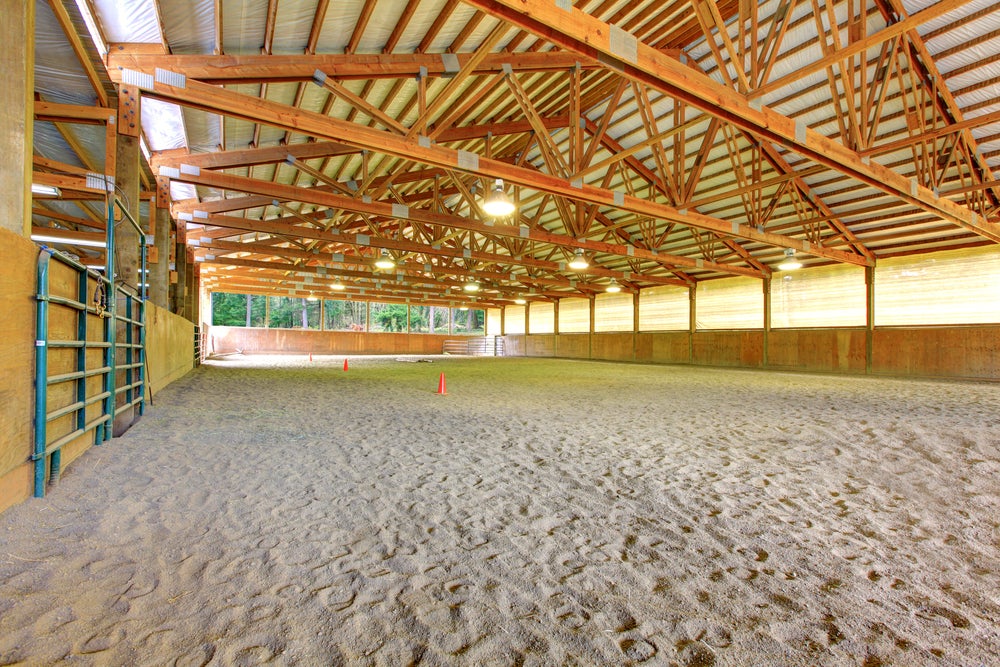
Arena Maintenance Schedule

Upkeeping your arena is a 3-fold process involving routines to be carried out daily, monthly, and yearly.

Daily Maintenance

  1. You should drag your arena every day for the best results, though once every other day is fine if you don't ride it that often.
  2. Dampen your arena regularly to encourage the textile-based footing ingredients to bind together. Consistent moisture is key for a stable, long-lasting mix.
  3. Always clean up organic materials from your arena surface as soon as possible. Manure and urine create dust, spread bacteria, and change the surface texture if not dealt with immediately.

Weekly Maintenance

  1. Once a week, dig and mix deeper to ensure that a proper blend of footing additive is maintained. While you're at it, hand-rake hard-to-reach spots too.
  2. Ideally, the arena should be dragged once a week when it is not used to maintain optimal conditions.
  3. If the arena has been used extensively, put in a re-conditioning session.
  4. If you notice any jumps in the arena, be sure to move them and properly condition the spots where they were originally located.

Annual Maintenance

  1. Arena flipping is traditionally done yearly and is often seen as the equestrian version of spring cleaning. The process usually involves scraping down the bottom level to remix all footing components evenly.
  2. When flipping the sand, take a moment to evaluate the quality of the footing additives and sand. You may need more of either.

Looking To Construct Your Horse Arena in Nazareth, PA? We Can Help!

We build high-quality horse arenas at Dirt Werx, serving Nazareth, PA, and suiting various budgets and needs. Whether you need an indoor or outdoor arena for dressage, show jumping, reining, or western riding, we can create a custom design that will exceed your expectations. We also offer renovation and restoration services for existing arenas.

Get a free estimate today!
Posted in:

Related Posts

9-consideration-when-choosing-the-right-retaining-wall-for-your-property. Dirt Werx.

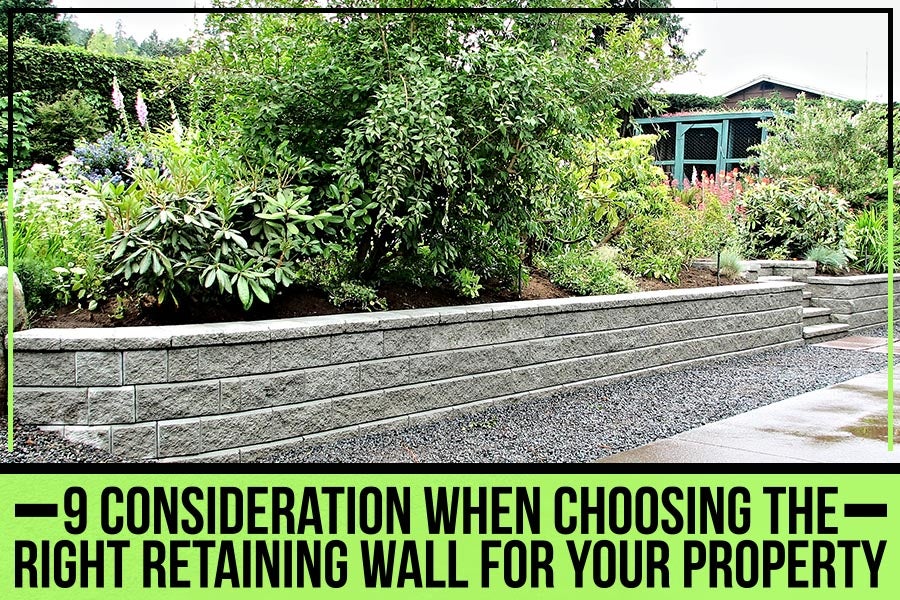
9 Consideration When Choosing The Right Retaining Wall For Your Property

The benefits of having a retaining wall are very clear. Not only does it beautify your property, but it also helps to keep landscaped terraces of soil in place and manage water runoff. With so many creative designs of retaining walls on the market, it can be challenging to determine the right one for you. In this blog post, we'll give you pointers on how to choose the right retaining wall for your needs. So, continue reading! 1. Location - The soil texture, slope, and drainage patterns are a few factors to consider when deciding on your retaining wall's location. A firm and well-drained soil offers maximum support to a retaining wall. 2. Type of Retaining Wall - There are multiple retaining wall types available in the market, like timber, concrete, brick, and stone walls. The selection depends on many factors, such as the purpose of the wall, height, and load-bearing capacity. 3. Size of Retaining Wall - The size of your retaining wall will be determined by its purpose. A smaller wall will suffice if you're looking to accent your landscaping. However, if you're looking to create more functional space or manage runoff from a larger area, you'll need a taller and broader wall. 4. Structural Support - Gravity alone will not be enough to hold the soil behind the retaining barrier. You'll need additional reinforcement methods to support the wall and ensure its longevity. 5. Drainage System - Water is the biggest nemesis of a retaining wall; you need to ensure the wall has a proper drainage system to avoid water damage. 6. Materials - You can use many materials for a retaining wall, and each offers unique benefits to go with factors like heat & precipitation – which can influence the soil. Work with a qualified retaining wall installer to choose the best material for your needs. 7. Maintenance and Repair - Even the best-built retaining walls will need regular maintenance and occasional repairs. Develop a foolproof plan to avoid these eventualities. 8. Consider the Purpose of the Retaining Wall – Are you looking to create unique outdoor living spaces? Improve your home's curb appeal? Protect your property from water damage? The retaining wall's purpose - why you need the retaining wall - will help determine the best material and style for your needs. 9. Durability - Retaining walls are subject to a lot of wear and tear, so choosing a material that can withstand the elements is essential. Some popular choices include concrete, stone, and brick. How Does Your Property Benefit From A Retaining Wall? Retaining walls can offer many benefits to your property. You can use them to create unique outdoor living spaces, increase your home's curb appeal, and improve the overall value of your property. When appropriately installed, retaining walls can also help to prevent soil erosion and protect your home from water damage. If you require a retaining wall for your property, Dirt Werx LLC is the company to call in Easton. Our excavation experts will help you choose the right retaining wall for your needs and install it quickly and efficiently. Contact us today for a free estimate on retaining walls installation!

What Makes Land Clearing So Necessary. Dirt Werx

What Makes Land Clearing So Necessary?

Key Takeaways: Land clearing removes existing structures and other obstacles from an undeveloped area to make it suitable for construction projects. It is necessary to increase land value and aesthetics, eliminate fire hazards, create accessible areas, prepare for construction, protect against pests, etc. Hiring a professional land-clearing service provides many benefits, such as cost savings and increased safety. Dirt Werx LLC specializes in efficient and effective land-clearing services tailored to specific needs with competitive prices while delivering superior results. Standing amidst a wild expanse of land, one must admire the beauty of its untamed wilderness. The trees tower overhead in an impressive array, each bearing its unique characteristics among the richness of nature's vastness. But while there is undeniable magnificence to behold in such scenery, it’s also a reminder that this land has been untouched by construction endeavors - until now. As any knowledgeable builder knows, preparing a plot for development entails more than simply breaking ground; it starts with thorough terrain clearing to make that vision a reality. Dirt Werx LLC examines why land clearing is necessary for successful building outcomes in this blog post. Land Clearing - An Overview Imagine you have just purchased a site that you intend to build upon. Whether for a commercial project or residential purpose, the first step is land clearing - which in layperson's terms, refers to removing obstacles from an undeveloped area to make it suitable for construction projects Depending on what's required by your project, land clearing may involve the removal of trees, stumps, undergrowth, and other vegetation. It may even entail excavating rocks and demolishing existing buildings that stand in the way or take away from the desired outcome. Reasons Why Land Clearing Is Necessary There are a couple of reasons why land clearing needs to be done for any development project: 1. Increase Land Value & Aesthetic By removing all the debris, dead trees, and other unwanted items on a property, you can transform what seemed like unusable terrain into something suitable for construction projects such as houses, yards, or commercial buildings. 2. Eliminate Fire Hazards Dead vegetation, brush, and other combustible materials can create a fire hazard if they accumulate in the same area for too long. Depending on where you live, this could be especially dangerous during wildfire season when there are higher chances of an uncontrolled blaze getting out of hand. To prevent this from happening, land clearing services can come in and completely remove any flammable debris from the property. It helps to ensure no fire risk on your property or nearby areas. Also read: Homeowner’s Guide: Differences Between Trenching & Excavation 3. Create Accessible Areas Areas with heavy foliage may be difficult or inaccessible by foot, car, or machinery. By clearing away overgrown trees and brush, land-clearing services can create accessible pathways for people and vehicles, including hiking, biking, or horseback riding trails. It is also beneficial if you regularly transport equipment or supplies onto a piece of land since it will make doing so much easier than trying to move around obstacles every time. 4. Prepare For Construction If you're considering building on a piece of land, land-clearing services can clear away trees, shrubs, and other obstructions to make room for any construction project. 5. Protect Against Pests When overgrowth is cleared away, there’s less risk of pests on your property or nearby areas. Overgrown vegetation provides an ideal environment for many insects and animals, which can spread disease and cause damage if left unchecked. By hiring land clearing services, You can avoid these issues, and your property will be protected against the threats of pests. 6. Maintaining Property Value A well-maintained property can help with increasing its real estate value. When land is cleared away, it helps to create an open space that potential buyers are more likely to find attractive. It may increase the value of your property and make it easier to sell down the line. 7. Reduce Disease Spread Land clearing can also help to reduce the spread of diseases, such as those carried by mosquitos. Removing tall grass or other vegetation that provides a breeding ground for pests reduces the risk these animals and insects pose. Benefits of Hiring Land Clearing Professionals Professionals are experienced in this area and know what tools to use to do the job quickly and effectively without damaging your land. They will also be able to advise you on how best to maintain your property for the long term. In addition, professionals are aware of any regulations that may apply in your region and can ensure that you follow them correctly. Regarding safety concerns, they can provide an extra layer of security for keeping your family safe. Hiring a professional land-clearing service provides many benefits, including cost savings, efficiency, potential environmental improvements, and increased safety. Suppose you need help clearing or maintaining your land over the long term. In that case, a professional land-clearing service may be your solution. Professional land-clearing services specialize in preparing and maintaining land for construction or other uses. They have the necessary knowledge, skills, and equipment to quickly and efficiently clear vegetation, remove debris, grade terrain, and build roads, among other tasks. Additionally, professional land-clearing services often possess experience working with local governmental bodies and organizations to ensure timely execution and compliance with regulations. Let Dirt Werx Take Care Of It With numerous years of experience in the construction sector, Dirt Werx LLC is renowned for being one of Allentown's premier service providers. Our experienced team consists of experts fully qualified to execute all types of complex building tasks with confidence and accuracy. Our services come at competitive prices for your convenience and satisfaction while delivering superior results! Regarding land clearing, Dirt Werx LLC is the team you can depend on. We specialize in efficient and effective land-clearing services tailored to your specific needs. Our professionals will start by carefully reviewing your project requirements to ensure that all necessary guidelines are followed for maximum safety and satisfaction. Get a free estimate today.

what-are-the-risks-of-a-residential-demolition. Dirt Werx.

What Are The Risks Of A Residential Demolition?

Key Takeaways: Residential demolition involves heavy machinery, power tools, and falling debris that can cause serious injuries or fatalities if proper safety protocols are not followed. Demolition work can generate strong vibrations that damage adjacent structures, especially if the demolished building is attached to other facilities. If mishandled, older homes may contain hazardous materials such as asbestos, lead-based paint, or other toxic substances that threaten workers and the environment. Residential demolition can disrupt the surrounding community, causing noise, air, and other disturbances. Every year, thousands of residential properties across the United States are demolished to make way for new developments or to remove outdated and unsafe structures. While residential demolition may seem routine, it is not without risks. According to a report by the Bureau of Labor Statistics, the construction industry accounted for 21.2% of all workplace fatalities in 2020, with demolition and excavation work being among the most hazardous. From potential health and safety hazards to environmental concerns, residential demolition poses several risks that must be carefully managed. In this blog post, demolition experts from Dirt Werx LLC will explore the risks associated with residential demolition and the best practices for minimizing those risks. Whether you are a homeowner planning a renovation or a contractor offering demolition services, understanding these risks is crucial to ensuring a safe and successful project. Risks Associated with Residential Demolition Residential demolition is a complex process that involves several potential hazards. Although the goal is to remove outdated or unsafe structures to make way for new development, the demolition process can pose a significant risk to workers and bystanders. Here are some risks associated with professional residential demolition. Health and Safety Hazards Residential demolition involves heavy machinery, power tools, and falling debris that can cause serious injuries or fatalities if proper safety protocols are not followed. Workers are at risk of accidents, and bystanders may be in danger if they are too close to the demolition site. To minimize these hazards, contractors must implement proper safety protocols, provide workers with the right safety gear, and ensure that everyone on the site follows safety guidelines. Structural Damage to Neighboring Buildings Demolition work generates strong vibrations that can damage adjacent structures, especially if the demolished building is attached to other buildings, such as in a row house or complex apartment setting. The risk of structural damage can be heightened in these cases, making assessing and managing the risk critical. Residential demolition experts must have a detailed plan to minimize structural damage and prevent liability for repair costs. Environmental Hazards If handled incorrectly, older homes may contain hazardous materials such as asbestos, lead-based paint, or other toxic substances that threaten workers and the environment. These dangerous materials require proper identification, removal, and disposal according to strict regulations to minimize exposure and contamination. Home demolition contractors must comply with local, state, and federal regulations when dealing with hazardous materials during demolition. Noise and Air Pollution The demolition process generates high levels of noise that can disturb neighbors and cause health problems for workers. Dust and debris from the demolition can also lead to air pollution, harming the environment and people's health. To minimize the impact of noise and air pollution, home demolition contractors must use proper equipment. They can also implement noise-reduction measures such as sound barriers and dampening materials. Dust control measures such as spraying water or using vacuum systems are also necessary. Damage to Underground Utilities and Infrastructure Water, gas, and electrical lines may be located near the demolished building, making them vulnerable to damage. Damage to these utilities can lead to costly repairs and service interruptions, affecting not just the property being demolished but also neighboring properties. To prevent damage to underground utilities and infrastructure, contractors must have accurate and up-to-date information on the location of these utilities and plan the demolition accordingly. It may involve shutting off utilities during the demolition, rerouting them, or taking other necessary precautions. Also Read: 5 Arena Maintenance Tips for Horse Arenas Best Practices for Minimizing Risks Contractors can implement several best practices to minimize risks to workers, neighboring properties, and the environment. Here are some of the best practices that can help reduce the risks associated with residential demolition: Conducting a Thorough Risk Assessment Before starting demolition work, contractors should conduct a thorough risk assessment to identify potential hazards and develop a plan to minimize them. The risk assessment should include an evaluation of the structural integrity of the building, the presence of hazardous materials, the proximity of neighboring buildings and utilities, and the environmental impact of the demolition. Implementing Safety Protocols and Procedures To minimize the risk of accidents and injuries, contractors should implement safety protocols and procedures that meet or exceed industry standards. It includes providing workers with the appropriate safety gear, ensuring that workers are adequately trained on using the equipment safely and establishing safety protocols for handling and disposing of hazardous materials. Using the Right Equipment and Techniques Choosing the right equipment and demolition techniques can minimize risks associated with residential demolition. For example, using hydraulic excavators and cranes to remove large structures can reduce the risk of structural damage to neighboring buildings. Similarly, high-reach excavators can help reduce the risk of damage to underground utilities and infrastructure. Correctly Identifying and Handling Hazardous Materials As discussed before, older homes may contain hazardous materials, posing a risk to workers and the environment if improperly handled. Demolition contractors must identify and manage these materials according to strict regulations, including proper removal, disposal, and reporting of incidents. Engaging with Neighbors and Local Authorities Residential demolition can disrupt the surrounding community, causing noise, air, and other disturbances. Engaging with neighbors and local authorities can minimize the impact of the demolition and promote good relationships with the community. It can include communicating the demolition schedule, providing information about safety protocols, and addressing any concerns or complaints during demolition. By implementing these best practices, contractors can minimize the risks associated with residential demolition, promote safety for workers and bystanders, and protect neighboring properties and the environment. Dirt Werx LLC Has Professional Demolition Experts to Get the Job Done If you're planning a residential demolition project in Bethlehem, working with a professional demolition expert that prioritizes safety and adheres to best practices is essential. At Dirt Werx LLC, we specialize in excavation, demolition, land clearing, and site preparation services. We're committed to providing our clients safe, efficient, and reliable services. So why wait? Contact us today to get a free estimate.